
You may already know how fast details get lost when care stretches across years. A filling done by one provider, a medication change from another, a note about dry mouth after a hospital stay, then a move into assisted living or a nursing home. The person receiving care is left in the middle, and families are often the ones trying to piece it all together, especially when coordinating services like dental implants Annapolis. That is exhausting.
Why consistent dental records matter for long term care comes down to one simple truth. Oral health does not sit apart from the rest of the body. Clear, ongoing records help protect comfort, nutrition, speech, infection control, and treatment decisions over time. When records are missing or scattered, small problems turn into painful ones, and routine care becomes guesswork.
Long term oral health records protect care when life changes
Long term care often involves transitions. A person may go from living at home, to rehab after a fall, to assisted living, then to a skilled nursing facility. Each move creates new chances for information to disappear. If a new care team does not know which teeth were treated, whether dentures fit properly, or if the patient has a history of gum disease, they start from scratch.
That gap matters more than many people realize. A resident who stops eating well may not be “just slowing down.” Ill fitting dentures, untreated decay, mouth sores, or infection may be the reason. The National Institute of Dental and Craniofacial Research explains in its resource on oral health across the lifespan for older adults that oral disease can affect chewing, speaking, social comfort, and overall health. In long term care, those effects build on each other quickly.
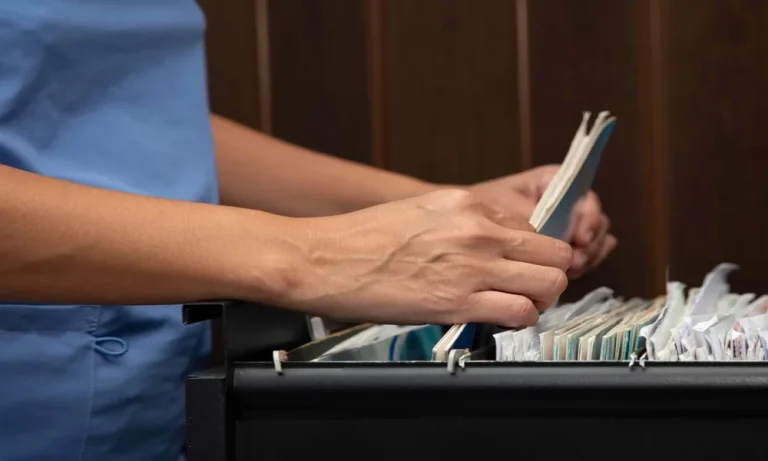
Consistent records create continuity. They show prior x rays, existing restorations, gum status, medications that affect saliva, allergies, denture details, and patterns that only become clear over time. That kind of record is not paperwork for its own sake. It is a map.
Missing dental documentation raises medical and financial risks
When records are incomplete, treatment decisions become slower and less precise. A provider may repeat imaging that already exists. A caregiver may miss signs of a worsening infection because no one documented earlier inflammation. A resident with memory loss may not be able to explain where it hurts, when a crown was placed, or why a partial denture no longer fits.
This creates emotional stress for everyone involved. You may be trying to answer questions you should never have to answer from memory. Was that tooth removed last year or five years ago? Did the dentist say the lesion needed watching? Was the swallowing problem connected to mouth pain? These are not small details.
There is also a cost issue. Repeated exams, duplicate x rays, delayed treatment, emergency visits, and denture remakes all add up. Preventive care is usually less expensive than crisis care, but prevention depends on knowing the baseline. That is where consistent dental documentation earns its value.
Research published through the National Library of Medicine has long shown a strong connection between oral conditions and the health of older adults in care settings, including the burden of untreated disease and the need for better coordination across providers. You can read more in this review on oral health care in older populations. Long term care facilities also work within federal oversight and care standards, which makes accurate health information part of safe practice. The Centers for Medicare and Medicaid Services outlines broader expectations for nursing homes, and oral care fits into that larger picture of resident safety and quality.
Dental record continuity supports better daily care
Good records do more than guide a dentist. They help nurses, aides, family members, and facility staff understand what daily support looks like. If a chart notes that a patient has dry mouth from medication, staff can watch for cracked tissue, discomfort, and trouble wearing dentures. If the record shows a person needs help removing and cleaning a partial, that task becomes part of routine care instead of being missed for weeks.
Dental records for long term care also reduce preventable suffering. A resident who becomes withdrawn may be dealing with tooth pain, not mood change. A person who resists meals may have a broken tooth or sore gums. Accurate records make it easier to connect those dots before the problem grows.
| Care Situation | With Consistent Records | Without Consistent Records |
|---|---|---|
| New admission to a facility | Staff knows denture status, recent treatment, and oral risks | Staff relies on memory, incomplete forms, or visual guesswork |
| Mouth pain or swelling | Provider compares current findings with prior notes and x rays | Diagnosis may be delayed and imaging may be repeated |
| Nutrition concerns | Care team checks chewing ability and oral history quickly | Poor intake may be treated as a general decline only |
| Denture problems | Records show fit history, repairs, and instructions | Loss, poor fit, and discomfort may go unresolved longer |
| Ongoing preventive care | Cleanings, periodontal findings, and watch areas are tracked over time | Small issues are missed until they become urgent |
Practical steps make oral health continuity easier
1. Keep one updated dental summary.
Ask your general dentist for a simple record packet that includes diagnoses, treatment dates, current concerns, medication related oral issues, denture information, and the most recent x rays if available. Store a printed copy and a digital copy where family or caregivers can find it fast.
2. Share records at every care transition.
Bring dental information when someone enters rehab, assisted living, memory care, or a nursing facility. Do not assume it will transfer automatically with other medical records. Oral health history is often left out unless someone asks for it directly.
3. Review the record after changes in health.
Update the dental file after hospitalizations, new medications, weight loss, stroke, cancer treatment, or changes in cognition. These events often affect oral care needs. A current record helps the next provider respond with less delay and less confusion.
Steady dental records make long term care safer and less stressful
If you are managing care for an older adult, you are already carrying a lot. Keeping oral health information consistent may feel like one more task, but it often prevents larger problems later. Better records mean less guessing, faster treatment, and a clearer picture of what a person needs to stay comfortable and eat, speak, and live with dignity.
A trusted general dentist can help you build that continuity and keep records current as care needs change.