
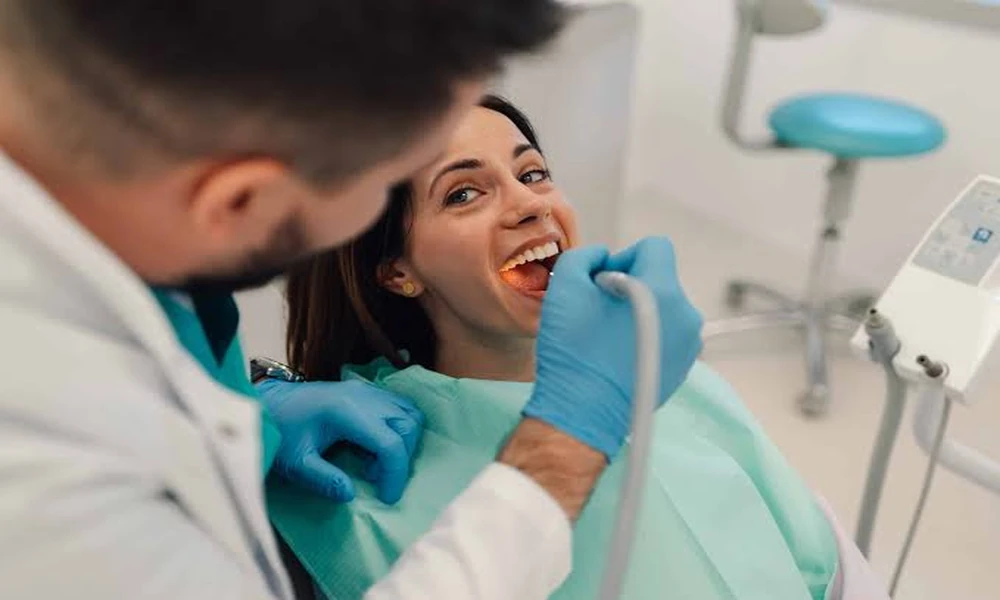
You might put off a cleaning for months, maybe longer, because the stress starts before you even book the visit. Your mind fills in the blanks. Will it hurt? Will you be judged? Will the dentist find something expensive and urgent? Dental anxiety often grows in that silence, when you do not know what is coming and your body treats the unknown like a threat. For patients exploring options to replace missing teeth with a dental bridge in Georgetown, those same worries can make it even harder to take the first step.
That is why How General Dentistry Uses Patient Education To Reduce Anxiety matters. A good general dentist does more than examine teeth. Clear explanations, simple language, and honest expectations can lower fear before treatment starts. When you understand what the appointment involves, why a procedure is needed, and what you can do to stay comfortable, the visit feels more manageable and less personal, less like something being done to you and more like something being done with you.
Patient education changes the emotional tone of general dentistry
Fear at the dentist is common, and it is not just about pain. Many people worry about loss of control, embarrassment, bad past experiences, needles, sounds, or cost. Research from Harvard points out that dental fear can be tied to both the procedure itself and the feeling of helplessness that comes with it. You can read more in this overview of getting to the root of dental fear.
Education helps because anxiety feeds on uncertainty. If your dentist says, “You need a filling,” and stops there, your mind may jump straight to pain, drills, and a large bill. If that same dentist explains what decay looks like, how deep the cavity is, how long the filling takes, what you will feel during numbing, and what recovery is like, the picture changes. You still may not love the appointment, but the fear usually drops because the unknown shrinks.
This is one of the most useful forms of dental anxiety reduction through education. It is not fancy. It is direct, human communication. You are told what is happening, why it matters, and what choices you have.
Dental fear gets worse when people avoid care
Skipping visits can feel like relief in the moment. Then a small issue becomes a bigger one, and the next appointment carries more shame, more cost, and more treatment. That cycle is hard to break. A patient may avoid a routine exam because they are nervous, then end up needing a root canal or extraction later, which confirms the fear they were trying to avoid in the first place.
The University of Texas Health Science Center at San Antonio explains that avoiding care because of fear can damage oral health over time. Their guidance on not letting dental fear affect your oral health speaks to a pattern many patients know well.
Patient education interrupts that pattern early. In general dentistry patient education, the dentist or hygienist may explain what happens during a standard exam, show digital X rays on a screen, describe the reason for each tool, and agree on a signal you can use if you need a pause. That kind of preparation lowers the sense of being trapped. It also builds trust, which matters just as much as technique.
Clear explanations make common dental procedures feel more manageable
Most anxiety rises around the parts people cannot predict. Numbing is a good example. Many patients fear the injection more than the treatment. A calm explanation of the steps, topical numbing, pressure you may feel, and how long the area stays numb can prevent your body from going into full alarm.
The same is true for cleanings, fillings, crowns, and X rays. If you know the order of events, the sounds you might hear, and the sensations that are normal, you spend less energy bracing for danger. This is how patient communication supports fear reduction in dental care. It does not erase every feeling, but it reduces the intensity.
Education also helps with money stress. Anxiety is rarely just physical. If you are worried that one visit will turn into a long list of treatments you cannot afford, that tension follows you into the chair. A dentist who explains priorities, timelines, and options gives you room to think. You are less likely to feel cornered.
Educated patients usually feel more control during a dental visit
| Approach | What the patient experiences | Likely effect on anxiety |
|---|---|---|
| Minimal explanation | Unclear steps, surprise sensations, little chance to prepare | Higher stress, more muscle tension, more avoidance |
| Step by step education before treatment | Clear expectations about time, tools, sensations, and aftercare | Lower fear of the unknown, better cooperation, more trust |
| Shared control plan | Hand signal for breaks, consent before each step, options discussed | Less helplessness, stronger sense of safety |
| Visual aids and imaging review | Can see the problem and understand why treatment is advised | Less suspicion, less confusion, easier decision making |
What changes most is control. Anxiety often spikes when you feel passive, exposed, and unable to stop what is happening. Education gives you a map. A map does not shorten every trip, but it makes the road less frightening.
Small actions can make your next visit feel safer
Tell the office you are anxious before you arrive. Do not wait until you are in the chair with your heart racing. Say plainly that you have dental anxiety and need a slower, more explained approach. That lets the team plan for you instead of reacting in the moment.
Ask for a simple walkthrough of the appointment. You do not need a lecture. Ask what will happen first, what you might feel, how long it should take, and when you can ask for a pause. This works especially well for any general dentist visit that feels loaded with uncertainty.
Agree on one control signal and one next step. Pick a hand raise for breaks. Then focus only on the next step, not the whole future of your teeth. If today is an exam, let it be an exam. If treatment is needed later, you can decide after you have clear information.
Patient education helps turn dental visits into something you can handle
You do not need to force yourself to be fearless. You need care that respects how fear works. When a dentist explains, listens, and gives you a role in the process, anxiety often stops running the whole show. That is one of the quiet strengths of general dentistry. Good care is not only about fixing teeth. It is also about helping you feel safe enough to come back.
If you have been delaying an appointment because of fear, start with a conversation and ask for clear guidance at every step. That alone can change the experience.
